
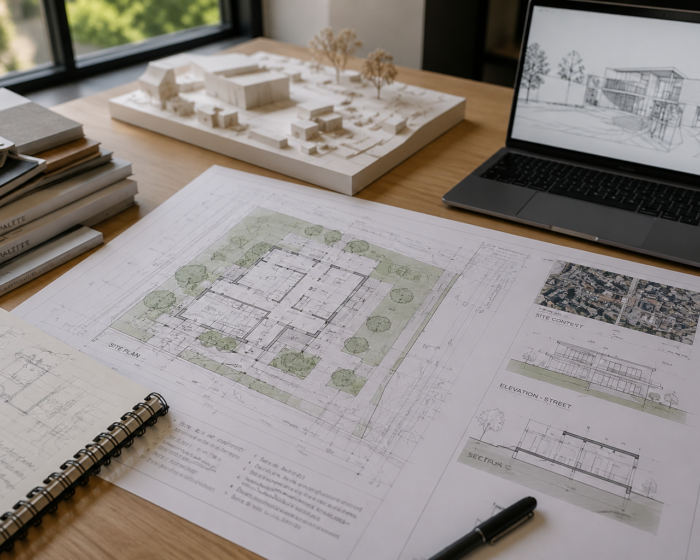
Drawings that explain the proposal in its site context
Planning drawings help the responsible authority and other stakeholders understand what is proposed, where it sits on the land and how it relates to surrounding properties.
The required drawing set varies according to the development, planning controls and information requested. It may include site plans, floor plans, elevations, sections, shadow diagrams, overlooking information, neighbourhood context, development data and other project-specific material.
Plantech can prepare design and drawing information for residential, multi-residential and commercial proposals. The scope should be based on the site, intended development and advice from the relevant authority or town-planning consultant.
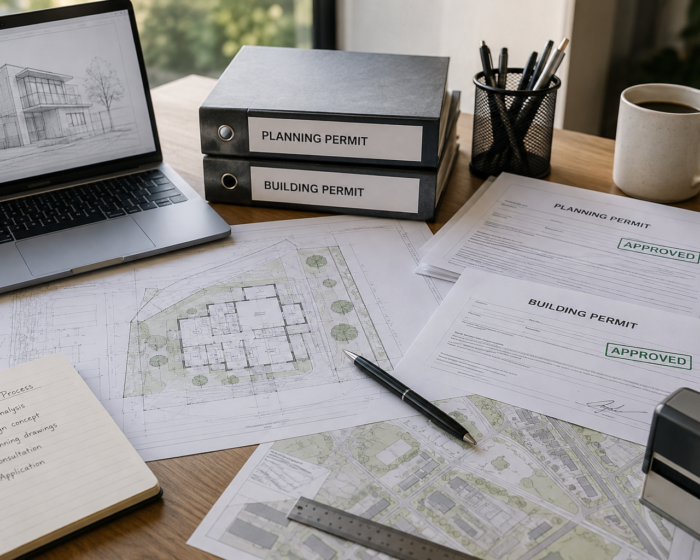
Planning permit and building permit are different processes
A planning permit deals with the use and development of land under the planning scheme. A building permit deals with the construction aspects of the work under building legislation. A project may require one, both or neither, depending on the circumstances.
Where a planning permit is required, any later building-permit documents generally need to be consistent with the planning permit and endorsed plans. It is therefore important to resolve the planning design before detailed documentation proceeds too far.
Plantech prepares and coordinates design information. The responsible authority decides whether a planning permit is granted, and the appointed registered building surveyor assesses and may issue a building permit.
When a town planner may be required
Some applications benefit from or require specialist town-planning advice. A town planner may review the planning scheme, prepare a written planning response, advise on strategy, communicate with the responsible authority or represent the applicant.
Plantech can liaise with an external town planner where this is included in the project scope. The website should clearly identify whether planning consultancy is provided by a partnering consultant rather than implying every service is performed in-house.
Early advice can be particularly useful for multi-residential development, overlays, non-residential uses, neighbourhood-character issues or proposals with previous authority feedback.
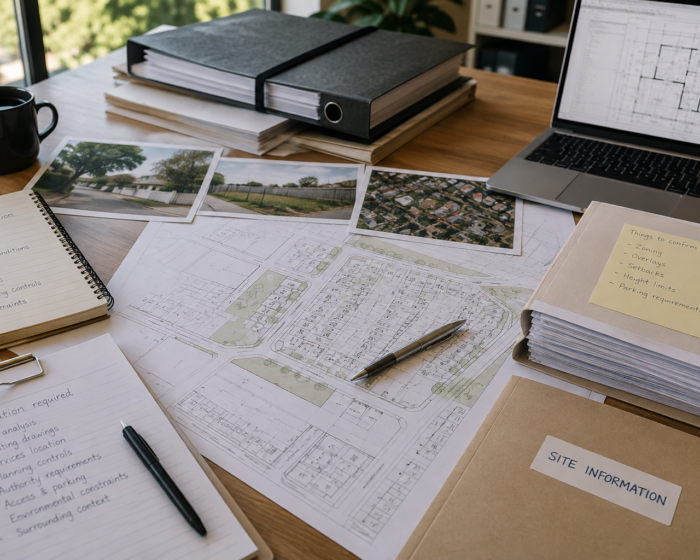
Information needed before planning drawings begin
Reliable site information is essential. Depending on the project, this may include the certificate of title, plan of subdivision, feature and level survey, existing conditions, easements, planning-property information, previous permits, service locations and a clear development brief.
Incomplete information can create redesign and delay. The proposal should identify which documents are supplied by the client, which are obtained from external consultants and which are included in Plantech’s fee.
The design stage should also consider likely specialist reports such as arborist, traffic, waste, landscape, acoustic, environmental, bushfire or other assessments where relevant.
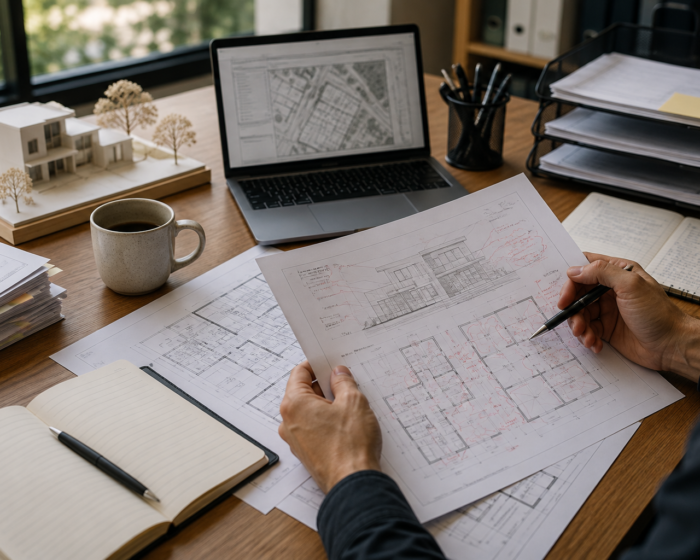
Responding to authority feedback
A responsible authority may request further information, raise concerns or require changes before making a decision. These requests should be reviewed against the agreed scope and the broader design.
Plantech can update drawings or coordinate responses where included. A request for change does not automatically mean the project will be approved, and it may affect other consultants’ work.
Clear version control is important. The website and internal process should distinguish concept drawings, lodged drawings, amended drawings and endorsed drawings so the project team uses the correct set.
Planning documentation for homes and developments
For a home extension, the key issues may be setbacks, overlooking, overshadowing, site coverage and neighbourhood context. For a townhouse or multi-unit project, access, private open space, waste, landscaping and the relationship between dwellings may also be central.
Commercial proposals can involve land use, parking, loading, signage, operating conditions and interface with adjoining properties. The exact planning assessment depends on the site and proposal.
Plantech’s role is to present the design clearly and coordinate the required drawing information, not to promise a particular planning outcome.
Request a planning-drawing review
Send the property address, proposed use or development, any existing survey and previous planning correspondence. Plantech can review the available information and explain whether a design proposal, planning drawing package or external town-planning advice appears to be the next step.
Frequently Asked Questions
They are drawings that explain a proposed use or development in its site and neighbourhood context for planning assessment.
No. The requirement depends on the planning scheme, site and proposed work. The responsible authority or a qualified town planner can confirm the pathway.
Plantech can prepare design drawings. A written planning report or strategic planning advice may be provided by an external town planner where separately included.
No. The responsible authority assesses the application and makes the decision.
The project may move into detailed documentation and building-permit assessment, with drawings kept consistent with the planning permit and endorsed plans.